
Crown Point Previous Resident Sources
The best source depends on the year and on whether the question is about ownership, occupancy, or the building itself. Crown Point previous residents appear across county land records and physical library collections. Start with the newest reliable identity for the parcel, then move backward without treating a gap as proof that nobody lived there.
| Source | Years It Covers | Where Held | What It Shows |
|---|---|---|---|
| Lake County Recorder index | More than 200 years of recordings; exact online start not posted | Recorder portal and office | Owners, transfer instruments, dates, book/page, legal description |
| Haines Criss Cross | 1982 to present | Crown Point Library | Address-to-occupant name in a dated volume |
| Robinson city directories | Scattered 1941 to 1996 | Library Indiana Room | Name and street entries across selected years |
| Phone books | 1975 to present | Library Indiana Room | Subscriber and address clues |
| Federal census | Lake County microfilm 1840 to 1880 and 1900 to 1930; public releases follow the 72-year rule | Library, State Library, NARA resources | Household names, ages, ties, and occupations |
| Sanborn maps and plats | Sanborn 1886, 1892, 1899 locally; other cited years | Indiana Room and historical sources | Building footprint, use, lots, and street context |
For a recent Crown Point address, begin with the assessor and Recorder. For the late twentieth century, add Haines and phone books. Earlier work depends more on Robinson volumes, census schedules, land indexes, Sanborn sheets, plats, newspapers, and archival help. Each source answers a smaller question than the phrase "who lived here" suggests.
Start Crown Point Address History
Lake County Assessor Engage accepts an owner, address, or parcel number. Save the Property ID, owner, situs address, mailing address, legal description, transfer entries, and record date. The Property ID is more dependable than repeating a street spelling across systems.
Do not merge situs and mailing. The inspected parcel at 122 N Main uses physical ZIP 46307 but sends owner mail to a post office box in Crown Point 46308. That does not place a past resident at the box. It shows where correspondence went. Transfer History can name parties and dates, but the Recorder's instrument remains the authority for the land transfer.
Open the transfer, document, tax, and map tabs only after confirming the physical parcel. A listed transfer date can set the next Recorder date range, while the legal description keeps the search on the same land. Preserve the portal's update date because a current card may summarize older events without reproducing the underlying instruments.
Trace Lake County Owners Backward
The deed chain tracks ownership, which is one part of a Crown Point previous residents search. Indiana law calls for separate alphabetical grantor and grantee indexes with recording date, book/page information, and a concise legal description. Start with the present owner's purchase deed and reverse the role at each transfer.
- Copy the current owner, Property ID, and full legal description from the assessor card.
- Find that owner's purchase in the Lake County Recorder document search. Note the grantor, grantee, recording date, document number, and book/page.
- Search the seller from that deed as a grantee. Their earlier purchase should point to the next seller.
- Repeat the role switch. Match the legal description at every link so a common name does not move the search to another parcel.
- When online access fails, call, mail, or visit with the names, date range, land description, and index references already collected.
- Grantor and grantee
- The grantor gives or sells an interest; the grantee receives it.
- Chain of title
- The linked sequence of recorded transfers for the same land.
- Legal description
- The lot, tract, or metes-and-bounds wording that identifies land even if its street label changes.
The Recorder portal says its collection exceeds three million documents and spans more than 200 years, but it does not post an exact online index start. Full field search and images sit behind an account. Images are listed at $1 per page plus a $3 order fee, so check the document length and current terms first.
Map Crown Point House Changes
Maps can show whether the same land held the same structure. The Crown Point Library keeps Sanborn fire-insurance sheets from 1886, 1892, and 1899 on a flip easel. A National Register bibliography also cites 1905, 1910, and 1921 sheets. Sanborn maps show footprints, materials, and use, not a complete occupant list.
Pair a sheet with a plat and legal description. Library and state sources include early land purchases from 1837 to 1857, appraiser plat books from 1869 and 1891, and an Index of Land Transfer Records for Crown Point, 1928 to 1940. That local index is a finding aid. Confirm its lead against the recorded deed.
A house-history stack can also use city GIS historical layers, preservation applications, and permits. Crown Point GIS began collecting data in 2006 and reports more than 470 current and historical layers. No sourced citywide street-renumbering project with a firm year was found, so follow the parcel and legal description through any number mismatch.
Crown Point Houses Beyond Portals
The old courthouse known as the Grand Old Lady, the 1882 Sheriff's House and Jail, and the 1847 Wellington A. Clark Homestead show why local address history is broader than a parcel card. County government centered on the square, and preservation files, plats, photographs, maps, newspapers, and building records can document how a site was used.
The Indiana State Library Lake County research guide points to land, marriage, birth, death, naturalization, newspaper, map, history, and microfilm holdings.
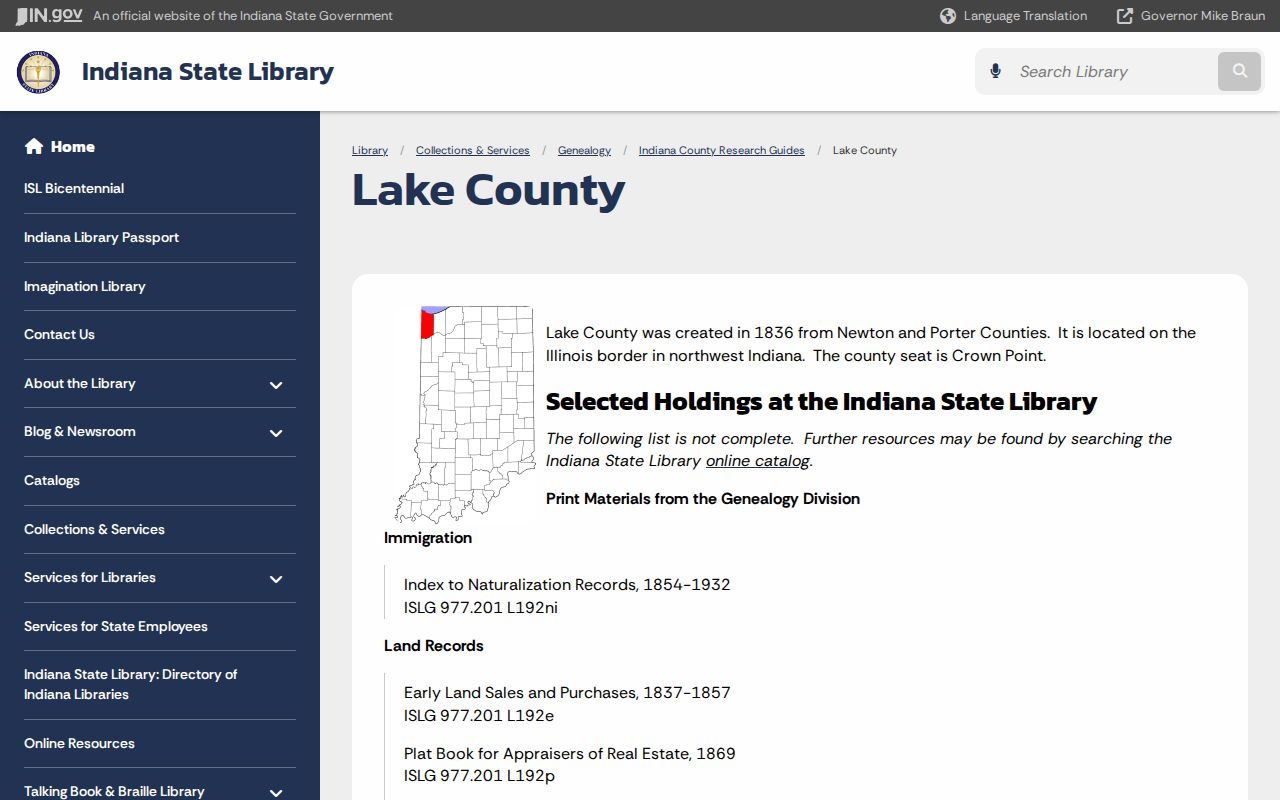
The guide is the fallback when a local volume is missing, a portal stops at an account screen, or a deed clue reaches an older county record series.
Match Crown Point Residents by Year
Ownership and occupancy can diverge. A family member, renter, subscriber, or business may appear at the street address while a different person or entity owns the land. To find previous residents, build a year-by-year worksheet rather than one undated name list.
- Choose the target year and the closest Robinson or Haines volume. Search both the street and alphabetical sections.
- Record every printed detail: name, initials, spouse or widow note, occupation, business use, unit, street spelling, page, and volume year.
- Compare the closest public census schedule. Use household composition and neighbors to test identity, while respecting the 72-year release rule.
- Check the county deed chain for ownership and newspaper microfilm for a sale, legal notice, marriage, death, school item, or move clue.
- Carry only a verified name and date into the next volume. Mark missing years as gaps, not as proof of absence.
The collections and abbreviations are covered in depth on the Crown Point city directory page. Here, the point is to use each dated volume as one link in a backward address trail.
Crown Point Newspapers Close Gaps
The Indiana Room holds almost every issue of the Crown Point Star and Lake County Star from the 1850s to the present on microfilm. The local obituary index begins in 1940, while the Crown Point Register and Star marriage/death index covers 1857 through 1930. Notices can date an arrival, departure, estate, sale, marriage, death, school tie, or business use between directory years.
Search the address, surname variants, spouse, and nearby landmarks. Save the newspaper title, issue date, page, and reel because "almost every" does not mean every issue. For a death, compare an obituary with cemetery and probate evidence. The Lake County Clerk is the custodian for probate files, and older vital indexes may point to a certificate held elsewhere.
Newspaper evidence is strongest when it explains a transition already suggested by a deed or directory. A notice alone should not be stretched into a full household claim.
Crown Point Archive Access Changes
The Crown Point Library offers ordinary local research help at no fee through its Indiana Room contact route. A request should include alternate names, a date range, street address, spouse or parent, and record type. Large family reconstructions may be referred elsewhere. The desk can verify whether a Robinson issue, Haines volume, phone book, map, or microfilm reel is available before a visit.
The Lake County Historical Society is another local lead, but its current Fresh New Start notice says relocation and partnership work are underway and museum hours are forthcoming.
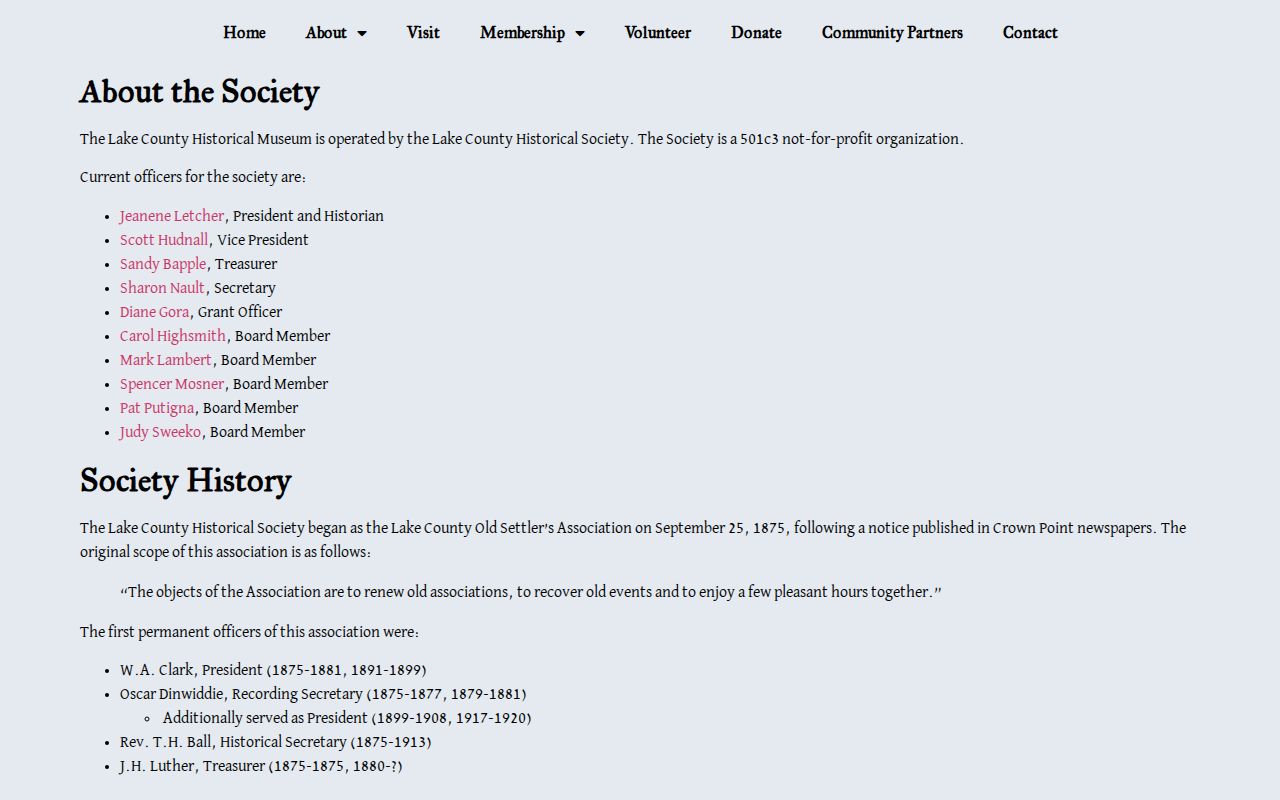
Contact the society before assuming that a collection is on site or that public hours have resumed. The State Library, Indiana Archives, FamilySearch catalog, and Northwest Indiana Genealogical Society provide broader fallbacks.
Crown Point Past Household Limits
A deed owner is not the same as an occupant. A directory name may be a householder, subscriber, business, or person who had already moved by publication. A census can supply a fuller household for a released year, but it still reflects one enumeration date. Previous residents become credible only when the address, person, role, and date align across sources.
Older gaps are usually custody and coverage gaps, not evidence of a destroyed Crown Point record run. Births before 1907 are local, directory issues are scattered, newspaper runs are nearly complete rather than complete, the Recorder search is gated, and modern court indexes do not replace old clerk files. State and WPA indexes are finding aids that should lead back to the original custodian record.
Lawful use. Research Crown Point previous residents for house history, genealogy, estates, or personal curiosity. Do not track, harass, threaten, or expose a living person.